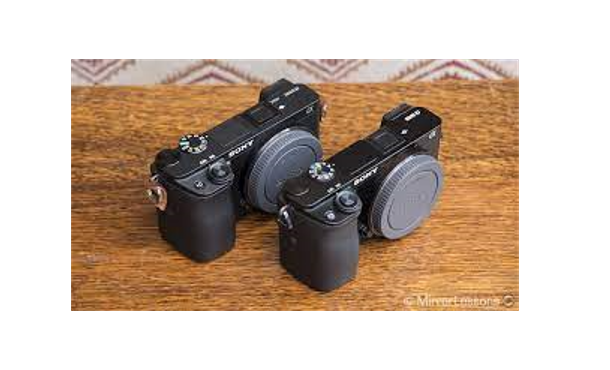
Sony a6000 vs a6300 [Ultimate Comparison]

The Sony A6300 and A6000 are two Mirrorless cameras that we will be comparing in this article.
The Sony Alpha a6300 is a camera in the Advanced Mirrorless class, whereas the Sony Alpha a6000 is a camera in the Entry-Level Mirrorless class.
The Sony A6300 was presented to the market in February 2016, and the Sony A6000 was introduced in April of the same year.
Because there is a 21-month gap between the A6300 and the A6000, we don’t anticipate seeing a significant technical difference between the two cameras; yet, the younger A6300 would still have an advantage, particularly in sensor technology.
The A6300 and A6000 are digital cameras that are part of Sony’s A6xxx series.
The most recent models from this series can be found in the section below.

What makes the Sony Alpha A6000 superior to the Sony Alpha A6300?
- Is it possible to get 20 shots more battery life?
- 420shotsvs400shots
- Is there an HDR mode built in?
- What if you had 8.16 percent less body volume?
- 361.8cm3 versus 393.96cm3 is 22.24 percent less expensive.
- 547 euros vs 703.49 euros
- Is it really 4mm thinner?
- 45mmvs49mm
What makes the Sony Alpha A6300 superior to the Sony Alpha A6000?
- 246 more focal points?
- 425 versus 179 has a 2x increase in maximum light sensitivity?
- ISO 51200 against ISO 25600
- Is it weatherproof (or splashproof)?
- Is there a focus motor built in?
- Does it have a microphone input?
- Does it have a stereo microphone?
- Is it really necessary to have 0.6k dots more screen resolution?
- 921.6k dots compared to 921k dots
- Is there a BSI sensor?

Key Specifications for the Sony A6300
- Announcement date: 2016-02-03 APS-C CMOS Sensor with 24MP resolution
- Isolation range: ISO 100 to 25600 ( expands to 51200)
- Sony E Mount (Sony E Mount)
- 3 Tilting Screens are available.
- 2359 kilobytes of data
- Viewfinder with an electronic display
- Continuous shooting at 11.0 frames per second
- 4K (UHD) video resolution (3840 x 2160 pixels)
- High-Definition Video at 120 frames per second
- Wireless built-in is a great feature.
- 404g, 120 x 67 x 49 mm, 120 x 67 x 49 mm
- Body Protected from the Weather
Key Specifications for the Sony A6000
- The announcement was made on April 23rd, 2014.
- APS-C CMOS Sensor with 24MP resolution
- Isolation range: ISO 100 to 25600 ( expands to 51200)
- Sony E Mount (Sony E Mount)
- 3 Tilting Screens are available.
- 1440 dots per inch
- Viewfinder with an electronic display
- Continuous shooting at 11.0 frames per second
- Full HD video resolution is 1920 x 1080 pixels.
- Wireless built-in is a great feature.
- The weight is 344g, and the dimensions are 120 x 67 x 45 mm.
- Sony Alpha NEX-6 was replaced by the Sony Alpha NEX-7
Detailed Review Between the Sony a6000 and a6300
It’s hard to think that Sony’s incredibly popular flagship APS-C camera, the Sony a6000, has been on the market for two years.
The camera was a recipe for success for one simple reason: it was inexpensive while providing all of the latest technology, much of which had never been integrated on a mirrorless camera before or could only be found on the most costly high-end models.
The new a6300 is the successor to this popular model, and it demonstrates that Sony is still one step ahead of the competition when it comes to technological improvements.
Indeed, it was stated on speculation sites that Sony purposefully delayed the release of the new model in order for the competition to catch up!
1. Height, weight, and build
You’d almost believe the Sony a6300 and its slightly newer Sony a6500 cousins were the same cameras if you looked at them side by side.
Looking closer, though, there are differences between the Sony A6300 and Sony A6500, despite the fact that they were released barely six months apart.
A few of these distinctions are significant and cause a difference in relative performance.
To begin, while both cameras share the same basic chassis and weather-proofed construction (a feature that Sony’s original Alpha a6000 model lacks), the a6500 Sony model is significantly thicker due to a more noticeable handgrip for easier handling.
It also weighs slightly more, by roughly 50 grams, due to some internals that we’ll discuss momentarily.
However, the weight difference is insignificant in the field: one weighs 454 grams (1 pound), while the other weighs 404 grams (0.88 lbs).
If you look closely at their external controls, you’ll see that the Sony a6300 and Sony a6500 are also very little different.
The newest model (the Sony a6500) has a little larger shutter release button as well as a very tiny difference in the power switch.
There’s also an extra C2 button beneath this combo.
Finally, the Sony a6500’s exposure dial has a slightly different grip texture, and the button for deleting images looks different, albeit it is located in the same location as the Sony a6300 (review).
The differences between the two digital mirrorless cameras in terms of external physical build are summarized here.
It’s also worth noting that both share the identical E mount lens mount specifications.
When we look at what our Sony a6300 vs Sony a6500 comparison means for each camera’s internals, we see a few other changes in construction.
The Sony a6500 camera, by far the most notable of these, features 5-axis in-body image stabilization technology. This feature is not available on the Alpha a6300 (in a Sony a6000 vs a6300 comparison both would be the same on this spec).
Thus, the Sony a6500 (review) provides higher image sharpness under difficult shooting conditions.
This is especially true for low-light shooting, as tiny tremors in the E-mount lens and sensor stability can degrade light absorption as the shutter opens for a longer fraction of a second.
In this one significant spec, the Sony a6500 clearly outperforms the a6300 model.
The modest build additions we mentioned above add up to offer the Sony a6500 that minuscule fraction of extra weight over the Sony a6300.
Taken as a whole, they don’t make a huge difference in handling, but they might be crucial if you have some extremely specific needs.

2. Performance and image quality
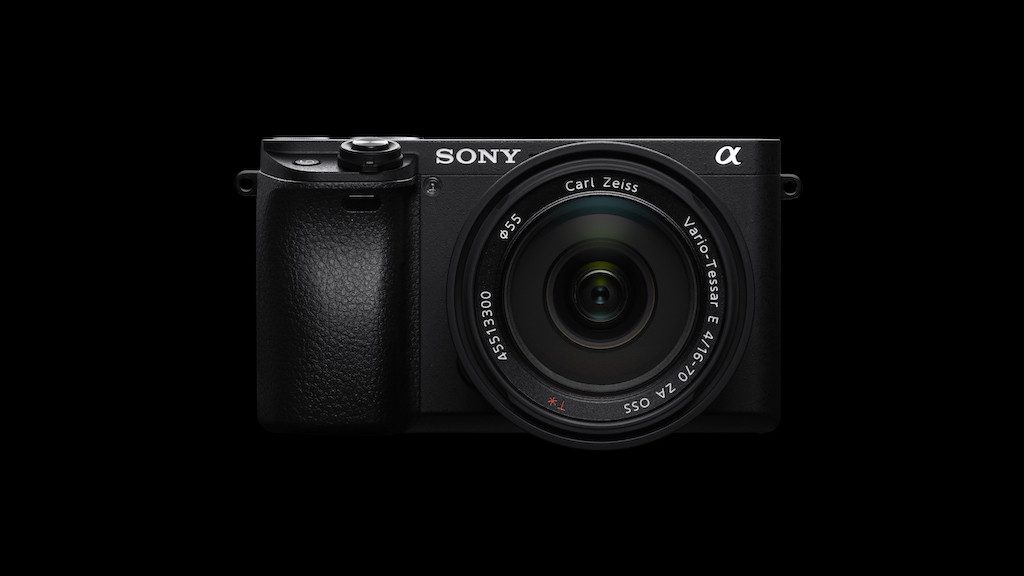
Things get a little hard when comparing the photographic quality of the a6300 and the a6500.
In general, the two cameras produce the identical image quality and have the same battery life, and why shouldn’t they?
Though the battery life on both models is comparable, the a6500 is slightly more power-hungry than the a6300, thanks in part to the 5-axis image stabilization, which constantly makes micro-adjustments to the sensor and phase-detection AF point array.
Battery life on Sony e mount APS-C cameras isn’t always outstanding, although it’s often better than equivalent Fujifilm X and other brand APS-C cameras.
Both variants have the same CMOS 24MP APS-C sensor size and type, as well as the same Bionz X video processing engine.
They’re also similar enough in terms of ISO range, 14-bit RAW processing (compressed), and practically every other significant photo and video rendering specification that everything produces the same results for photos taken under the same conditions.
The CMOS sensor’s 24 MP resolution provides lots of room for cropping in post-production or blowing up photographs from the cameras for your wall.
Both cameras have a good dynamic range, making the most of the CMOS sensor, and enough color depth to go into the shadows and highlights with minimum noise.
Both models start at ISO 100 and have high ISO performance on par – ISO 100 – 25600, however, the a6300 can go up to 51,200. Although the a6300 offers a higher high ISO, we wouldn’t recommend using 51,200 on an APS-C sensor camera. Neither camera has an in-built flash, but the Sony a6300 includes an external flash shoe.
The same is true for both cameras’ color profiles (Creative Styles); they are identical, as is their final color rendering.
When images are taken under similar settings and conditions with both the a6300 and the A6500, the only noticeable picture quality difference is between the two cameras.
The latter camera’s 5-axis sensor-shift image stabilization is the single most important reason for this.
It does what it is supposed to do, and although though both cameras have the same ISO, low-light noise levels, and color rendering, the sensor-shift stabilizing element in the a6500 makes it easier to take better, sharper shots in challenging shooting circumstances.
This is especially true in low-light situations.
We can notice that the JPEG and RAW color images in the newest editions have a little warmer tone.
This is, however, a minor issue.
The same holds true for video recording. Both cameras provide 4K video and have equal specifications in terms of resolution, frame rate, and bitrate.
If all settings and lighting conditions are kept the same, the video output from either camera looks practically identical.
3. A brand-new Exmor CMOS sensor with a resolution of 24.2MP.
Sony promises that the a6300’s newly designed 24MP APS-C sized Exmor CMOS sensor would maximize efficiency and overall performance.
Although the resolution is slightly lower than that of the previous model – 24.2MP versus the a6000’s 24.3MP – it uses copper wiring in its structure to increase light-gathering efficiency and expedite readout rates.
This, together with the new BIONZ X processor, should result in reduced noise and improved resolution.
The a6300 has 14-bit raw uncompressed output and 16-bit picture processing for raw recording, allowing for precise image quality modifications in post-production.
The a6300 does not support uncompressed RAW. Please accept my apologies for the error.
4. Enhanced ISO sensitivity
In terms of image quality, the Sony a6300 offers a wider ISO sensitivity range of 100-51200 than the a6000, which was limited to 100-25600.
The way the new sensor and improved processor interact should result in crisper photos at mid-to-high ISO settings.
If these enhancements make values like 6400 and 12800 workable for the majority of applications, it will undoubtedly be a nice addition.
Aside from that, it’s worth noting that the a6300 now has an ISO Auto minimum shutter speed setting.
Hooray!
5. Uninterrupted live view on EVF / LCD at up to 8 frames per second
For those who miss the immediacy of an OVF, the a6300 enables up to 8 fps continuous live-view photography with the EVF and LCD.
Though we haven’t tested it, this kind of speed should approximate the real-time shooting experience that comes with using an OVF while preserving all of the advantages of an EVF.
6. Enhancements to the focusing mechanism for stills and video
The focusing system has seen numerous changes, so let’s start with the smallest.
The a6300’s 4D FOCUSTM hybrid focusing system has been improved from the a6000, offering the world’s fastest AF acquisition time of only 0.05 seconds, according to Sony.
However, given the a6000 already had an exceptional acquisition time of 0.06 seconds, this is merely a minor improvement.
The new High-density Tracking AF technology, which improves subject identification and tracking performance, is the real show-stopper here.
The new a6300 features 425 phase-detection points and 169 contrast-detection points, compared to the a6000’s 198 phase-detection points and 25 contrast-detection points.
High-density technology can activate a high number of these points around a subject (7.5 times more than the a6000) and change them based on the subject’s movement, all while using the camera’s 11 fps continuous shooting and the previously mentioned 8 fps continuous live-view mode.
Because the AF points cover the whole field of view, the camera should be able to track moving subjects across the frame effectively, perhaps making it an outstanding sports or wildlife companion.
It should also be noted that autofocus can now be used when enlarging your scene on the screen or viewfinder.
This will allow you to fine-tune your focus for genres such as macro photography, which requires high precision. Other new features include more flexible spot AF and Eye AF in AF-C mode.
In terms of video recording, Sony claims that the a6300 focuses twice as fast as its predecessor.
There are further settings for AF speed and AF tracking sensitivity.
7. A-mount lens phase detection in the focal plane
When utilizing A-mount lenses with a mount adapter like the LA-EA3, A-mount users will be overjoyed to learn that the a6300’s 425 phase-detection AF points, better tracking, and focus precision will all be available.
Although A-mount lenses could be adapted to the a6000, access to the built-in phase-detection points was not possible.
The only way to get phase-detection points was to utilize the LA-EA2 or LA-EA4 with Phase Detection AF built-in.
8. Shooting mode with no sound
Anyone who has heard the grating sound of the shutter on the a6000 will understand why this is such a welcome enhancement.
With the a6300, you can now photograph silently and discreetly in places where the sound of a shutter can attract attention. It is even possible to shoot continuously at up to 3fps with AF/AE tracking.
9. 4K video recording and 120 frames per second slow motion
The Sony APS-C line-up has seen a significant upgrade.
The new a6300 is Sony’s first non-full-frame interchangeable-lens camera capable of shooting and recording internal high definition 4K video (XAVC S @ 100mbps) in the popular Super 35mm format with full pixel readout and no pixel binning.
It, like the a6000 with firmware update 2.00, uses the XAVC S codec for Full HD at 50 Mbps.
S-Log gamma recording with Gamma Display Assist (a new feature that allows you to verify your photos and focus while recording S-log movies), S-Gamut for broader color space, and expanded Zebra capabilities for greater exposure control are also featured.
Another distinguishing feature is the ability to shoot Full HD at 120 fps @ 100 Mbps.
This was initially seen on a Sony camera with the small RX100 IV and RX10 II, and then on the A7s II.
10. Enhancements to the body’s design, operability, and ergonomics
On the surface, the a6300 appears to be very similar to the a6000, to the point where you might have difficulty telling them apart.
However, there are a few major changes to the body that elevate the a6300 above its predecessor.
Most notably, the camera boasts a new magnesium alloy body that is dust and moisture resistant (but not completely weather-sealed).
The lens mount construction, as well as the shutter release button and mode dial, have been revised and reinforced.
There are now 9 programmable buttons, up from 7 on the a6000, to which you can assign any of 64 functions.
11. Additional EVF and LCD upgrades
The a6300’s electronic viewfinder (EVF) has been upgraded to a high-resolution XGA OLED Tru-Finder with about 2.4 million dots of resolution and corner-to-corner visibility. Because the a6000’s EVF has less resolution than its predecessor, the NEX-6, at only 1.4 million dots, this is a very welcome addition.
There is also a new EVF mode that allows photos to be displayed at 120 frames per second, making the live view more clear and fluid.
12. Line input from professional audio devices is supported.
The third notable enhancement is the new microphone line input, which accepts external microphones and supports XLR input via Sony’s XLR adapter kit (XLR-K2M / XLR-K1M / ECM-XYST1M).
The a6000, on the other hand, only has a built-in stereo microphone, therefore better audio must be recorded with an external recorder.
13. Sensor evaluation
One of the most important drivers of image quality is the size of the sensor within a digital camera.
A big sensor would typically have larger individual pixels that give higher low-light sensitivity, a wider dynamic range, and richer color-depth than smaller pixels in a sensor of the same technological generation.
Furthermore, when using a narrow depth-of-field to separate a subject from its background, a big sensor camera provides the photographer with more creative alternatives.
Larger sensors, on the other hand, are more expensive to produce and tend to result in larger and heavier cameras and lenses.
Both cameras under consideration have an APS-C sensor and a format factor (also known as “crop factor”) of 1.5.
This placed the review cameras in the medium-sized sensor camera category, which aims to achieve a compromise between image quality and portability.
The native aspect ratio (sensor width to sensor height) of both cameras is 3:2.
The two cameras under consideration not only have the same sensor size but also have the same resolution of 24 megapixels.
This agreement in sensor specifications suggests that the A6000 and A6300 have the same pixel density and pixel size.
It should be noted, however, that the A6300 is a little newer model (by 1 year and 11 months) than the A6000, and its sensor may have benefited from technological developments during this time.
The Sony Alpha A6000 features an ISO 100 to ISO 25600 native sensitivity range that can be expanded to ISO 100-51200.
The ISO settings for the Sony Alpha A6300 are identical.
DXO Mark has provided sensor performance measurements generated from a consistent methodology since 2007.
This service evaluates and analyzes camera sensor color depth (“DXO Portrait”), dynamic range (“DXO Landscape”), and low-light sensitivity (“DXO Sports”), as well as publishing an overall camera score.
The Overall DXO ratings for the two cameras under review are similar, implying that they offer comparable imaging capability.
The table below summarizes the physical sensor specifications as well as the results of the DXO sensor quality testing for a selection of comparator cameras.
Expert opinions
This is where professional reviews come in.
The table below summarizes the overall ratings of the cameras as reported by some of the main camera review websites (amateur photographer [AP], cameralabs [CL], digital camera world [DCW], dpreview [DPR], ephotozine [EPZ], photography blog [PB]).
As can be seen, professional reviewers agree on the quality of different cameras in many circumstances, although their assessments sometimes disagree, emphasizing the earlier argument that a camera decision is often a very personal choice.
However, the aforementioned review scores should be viewed with caution.
The evaluations were done in comparison to cameras of the same technological generation.
As a result, a score must be considered in the context of the camera’s introduction date and price, and comparisons of ratings among very different cameras or over extended time periods are meaningless.
Please keep in mind that some of the listed sites have evolved their review methodologies and reporting style over time.
Our Final Thoughts
The Sony a6500 is an excellent camera that represents the pinnacle of the Alpha 6000 camera family.
With the exception of a number of highly disparate characteristics in the a6500’s favor, the a6300 allows you to snap photos of virtually comparable quality.
If you wish to save money, we recommend it even more.
If, on the other hand, you truly require 5-axis image stabilization and greater picture writing performance and are willing to pay the extra money, the a6500 model is the way to go.
Regardless of which model you choose, both are superb interchangeable lens small mirrorless cameras with access to a large range of fantastic Sony e mount lenses.
Frequently Ask Questions
Is the A6300 better than the A6000?
While both cameras perform similarly up to 6400 ISO, the a6300 has better chroma and luminance noise management at 12800 and 25600 ISO.u003cbru003eu003cbru003eThe a6300 also offers an extended ISO value of 51200, which is similar to the a6000’s 25600 ISO. These distinctions apply to both RAW and JPG files.
Why is the Sony A6300 no longer available?
Both bodies have vanished from Sony’s list of interchangeable lens APS-C E mount cameras, and both are classified as discontinued on the Bu0026amp;H website.u003cbru003eu003cbru003eBy October, Sony had introduced the A6500, which everyone assumed was the successor to the A6300, which had been discontinued due to overheating difficulties.
Which of the Sony a6 series is the best?
For most people, the Sony a6100 is the greatest Sony mirrorless camera.u003cbru003eu003cbru003eIt is priced between the more basic a6000 and the more costly a6400, a6500, and a6600, but it has many of the features available in the more expensive devices.
Originally posted on December 23, 2021 @ 7:39 pm
![8 Best Mirrorless Camera for Wildlife [2022]](https://reneerobynphotography.com/wp-content/uploads/2022/01/Best-Mirrorless-Cameras-768x512.jpg)


![Sony a7iii vs a7riii [The Ultimate Comparison]](https://reneerobynphotography.com/wp-content/uploads/2021/12/2-sony.png)